









- Interview
Date
2025.12.04
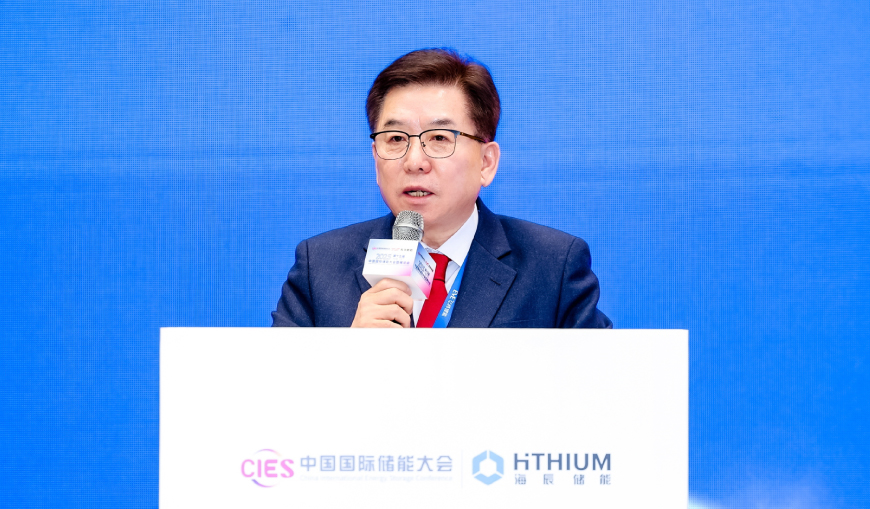
The Gwangyang Bay Area Free Economic Zone (GFEZ) is emerging as a key hub within Korea’s southern industrial belt.
Marking his first year in office this October, Commissioner Koo Chung-gon has focused on strengthening investment in GFEZ by visiting industrial sites and expanding engagement with both domestic and global companies. With extensive career experience as a member of the Jeonnam Provincial Assembly, president of Jeonnam Provincial University, and mayor of Hwasun, Commissioner Koo brings a diverse background in public administration and regional industrial policy. His experience provides a stable basis for shaping GFEZ’s future industrial strategy. Over the past year, the region has seen progress in major industrial complex development, alongside notable growth in new investment attraction.
As GFEZ restructures itself into a next-generation industrial base centered on secondary batteries, hydrogen, and advanced materials, Invest KOREA spoke with Commissioner Koo to learn more about the region’s direction and its approach to building a competitive industrial ecosystem. Read on to find out more.
As GFEZ restructures itself into a next-generation industrial base centered on secondary batteries, hydrogen, and advanced materials, Invest KOREA spoke with Commissioner Koo to learn more about the region’s direction and its approach to building a competitive industrial ecosystem. Read on to find out more.
Can you give us a brief introduction of GFEZ?
The Gwangyang Bay Area Free Economic Zone is Korea’s largest industrial and logistics-focused special economic zone, spanning the coastal cities of Yeosu, Suncheon, Gwangyang and the county of Hadong. Over the past two decades, GFEZ has upgraded its industrial structure—traditionally centered on petrochemicals and steel—and is now rapidly transforming into a hub for smart manufacturing, secondary batteries, hydrogen, and advanced materials across six specialized districts.
Our development vision goes far beyond building industrial parks. By integrating business-ready infrastructure with well-planned residential, educational, and tourism amenities, GFEZ aims to become a sustainable, integrated hub where global companies and talent can thrive together.
The Gwangyang Bay Area Free Economic Zone is Korea’s largest industrial and logistics-focused special economic zone, spanning the coastal cities of Yeosu, Suncheon, Gwangyang and the county of Hadong. Over the past two decades, GFEZ has upgraded its industrial structure—traditionally centered on petrochemicals and steel—and is now rapidly transforming into a hub for smart manufacturing, secondary batteries, hydrogen, and advanced materials across six specialized districts.
Our development vision goes far beyond building industrial parks. By integrating business-ready infrastructure with well-planned residential, educational, and tourism amenities, GFEZ aims to become a sustainable, integrated hub where global companies and talent can thrive together.
What differentiates GFEZ from other economic zones in Korea?
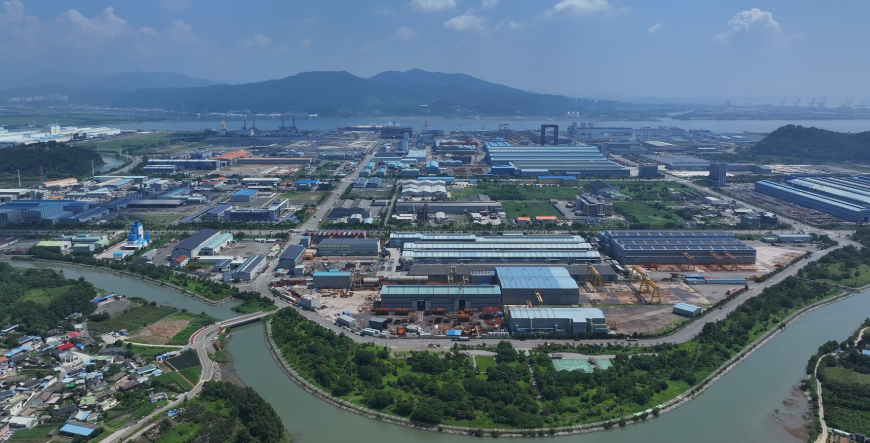
Three factors set us apart. First, unrivaled proximity between industrial sites and a global port. Gwangyang Port is one of the world’s top five transshipment hubs. Major industrial complexes are located just 10 to 20 minutes away by road, enabling companies to significantly reduce logistics costs from raw material sourcing to export. Its strategic access to key Asia–U.S.–Europe shipping routes is a major advantage for global manufacturers.
Second, a mature and resilient industrial ecosystem. Centered around the Yulchon Industrial Complex, steel, chemical, and materials companies have built a dense value chain over decades. This provides new entrants with reliable demand, strong partnership networks, and immediate access to essential utilities and infrastructure—reducing both upfront investment and operational risk.
Third, strong investment support from local governments. The provinces of Jeonnam and Gyeongnam, along with four municipalities, jointly offer comprehensive incentive packages, including tax reductions, land-lease discounts, and employment or facility subsidies. These programs have directly contributed to a surge in new investments from global secondary battery and eco-friendly manufacturing companies.
Three factors set us apart. First, unrivaled proximity between industrial sites and a global port. Gwangyang Port is one of the world’s top five transshipment hubs. Major industrial complexes are located just 10 to 20 minutes away by road, enabling companies to significantly reduce logistics costs from raw material sourcing to export. Its strategic access to key Asia–U.S.–Europe shipping routes is a major advantage for global manufacturers.
Second, a mature and resilient industrial ecosystem. Centered around the Yulchon Industrial Complex, steel, chemical, and materials companies have built a dense value chain over decades. This provides new entrants with reliable demand, strong partnership networks, and immediate access to essential utilities and infrastructure—reducing both upfront investment and operational risk.
Third, strong investment support from local governments. The provinces of Jeonnam and Gyeongnam, along with four municipalities, jointly offer comprehensive incentive packages, including tax reductions, land-lease discounts, and employment or facility subsidies. These programs have directly contributed to a surge in new investments from global secondary battery and eco-friendly manufacturing companies.
What are the key industries GFEZ is currently focusing on?
GFEZ is nurturing four strategic sectors: functional chemicals, green energy (including secondary batteries and hydrogen), metals/materials/components, and logistics/transportation.
Our secondary battery cluster, in particular, has become one of the most advanced in Korea. POSCO Group has established a full value chain—from lithium and nickel processing to cathode production and recycling—and related suppliers continue to relocate to the region, positioning GFEZ as a leading hub for battery materials.
The ESS industry is also expanding rapidly. Global manufacturers currently operate production bases in the Yulchon Complex, and with rising demand driven by renewable energy deployment, GFEZ is poised to evolve into a major ESS production and export base.
We are likewise strengthening ICT and data infrastructure. The new Jeonnam Cloud Data Center, now under construction, will play a critical role in advancing smart factory adoption and enabling deeper convergence of AI, big data, and manufacturing.
GFEZ is nurturing four strategic sectors: functional chemicals, green energy (including secondary batteries and hydrogen), metals/materials/components, and logistics/transportation.
Our secondary battery cluster, in particular, has become one of the most advanced in Korea. POSCO Group has established a full value chain—from lithium and nickel processing to cathode production and recycling—and related suppliers continue to relocate to the region, positioning GFEZ as a leading hub for battery materials.
The ESS industry is also expanding rapidly. Global manufacturers currently operate production bases in the Yulchon Complex, and with rising demand driven by renewable energy deployment, GFEZ is poised to evolve into a major ESS production and export base.
We are likewise strengthening ICT and data infrastructure. The new Jeonnam Cloud Data Center, now under construction, will play a critical role in advancing smart factory adoption and enabling deeper convergence of AI, big data, and manufacturing.
How is GFEZ approaching global investment promotion?
This year alone, we conducted nine overseas IR missions, meeting more than 200 companies across Japan, China, Europe, and Southeast Asia.
Interest from Japanese firms is particularly strong. As they reassess supply chains amid the weak yen and geopolitical uncertainties, Korea—and GFEZ in particular—is emerging as an attractive production base. Port accessibility, stable infrastructure, and reliable raw material channels are key factors influencing their interest.
European companies are showing growing demand for collaboration in secondary batteries, hydrogen, and plant engineering. Chinese firms, meanwhile, increasingly view GFEZ as a strategic production and export hub within Northeast Asia.
We are also carrying out joint marketing with the Yeosu-Gwangyang Port Authority, aligning port-related logistics development with industrial investment attraction. Several global logistics companies are currently reviewing entry based on this integrated approach.
This year alone, we conducted nine overseas IR missions, meeting more than 200 companies across Japan, China, Europe, and Southeast Asia.
Interest from Japanese firms is particularly strong. As they reassess supply chains amid the weak yen and geopolitical uncertainties, Korea—and GFEZ in particular—is emerging as an attractive production base. Port accessibility, stable infrastructure, and reliable raw material channels are key factors influencing their interest.
European companies are showing growing demand for collaboration in secondary batteries, hydrogen, and plant engineering. Chinese firms, meanwhile, increasingly view GFEZ as a strategic production and export hub within Northeast Asia.
We are also carrying out joint marketing with the Yeosu-Gwangyang Port Authority, aligning port-related logistics development with industrial investment attraction. Several global logistics companies are currently reviewing entry based on this integrated approach.
Could you tell us about the residential and tourism environment beyond the industrial complexes?
A competitive business hub must also offer a high-quality living environment. GFEZ places equal priority on strengthening residential, educational, and cultural amenities to attract global talent and support long-term corporate growth.
In the Gyeongdo District, an international hotel brand is investing KRW 350 billion to develop a premium resort and MICE facilities. In the Hwayang District, a beach condominium and 27-hole golf course are being developed to establish a major marine leisure destination.
The Sunwol District in Suncheon is emerging as a leading residential area on Korea’s southern coast, with a 6,000-unit housing complex and new global retail facilities confirmed. Its proximity to the Suncheon Bay National Garden further enhances its living and leisure appeal.
Moving forward, GFEZ will continue to develop as a global business hub that offers both an excellent place to work and an exceptional place to live.
A competitive business hub must also offer a high-quality living environment. GFEZ places equal priority on strengthening residential, educational, and cultural amenities to attract global talent and support long-term corporate growth.
In the Gyeongdo District, an international hotel brand is investing KRW 350 billion to develop a premium resort and MICE facilities. In the Hwayang District, a beach condominium and 27-hole golf course are being developed to establish a major marine leisure destination.
The Sunwol District in Suncheon is emerging as a leading residential area on Korea’s southern coast, with a 6,000-unit housing complex and new global retail facilities confirmed. Its proximity to the Suncheon Bay National Garden further enhances its living and leisure appeal.
Moving forward, GFEZ will continue to develop as a global business hub that offers both an excellent place to work and an exceptional place to live.
Source: The Gwangyang Bay Area Free Economic Zone
By Grace Park
Investment PR Team, Invest KOREA
Korea Trade-Investment Promotion Agency (KOTRA)