










- Home
- Investment Opportunities
- Latest Information
- Industry Focus
Industry Focus
- Energy
- Renewable Energy
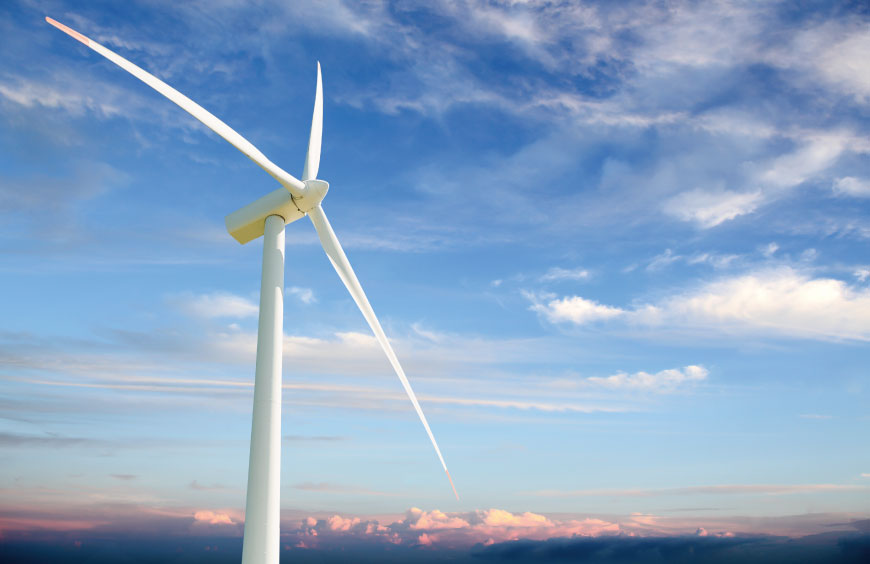
South Korea is expanding renewable energy deployment, led by solar and wind. To meet its targets, the government has set out measures covering siting, permitting and grid connection, and the accompanying policies go beyond generation capacity to build up the industries around it—manufacturing and supply chains, energy storage systems (ESS) and the power grid. At the same time, growing investment in semiconductors and AI data centers is expected to push electricity demand higher. If that policy push delivers real projects and meets corporate demand for renewable power, the market should grow, both for renewable generation itself and for the industries that supply it.
Rising Power Demand and a Wider Role for Renewables
In Korea, the case for renewable energy rests not only on cutting emissions and addressing climate change but also on energy security and industrial competitiveness. Since the outbreak of the war in Ukraine, renewables have drawn attention as a domestically produced energy source that can buffer against disruptions in fossil fuel supply. More recently, initiatives such as RE100 have pushed companies to source more of their power from renewables, alongside growing pressure to decarbonize supply chains. Shifting carbon rules, including the European Union’s Carbon Border Adjustment Mechanism, have also made emissions management a more pressing concern for exporters.
As large-scale investment plans in semiconductors and AI data centers take shape, demand forecasts are being revised upward. Updated projections released in August 2026, as the 12th Basic Plan for Long-term Electricity Supply and Demand was being drafted, put 2040 electricity consumption at 847.3–885.1 TWh and peak demand at 158.4–165.0 GW. These are working figures from the drafting process, not final numbers.1)
That adds to the list of questions the energy transition has to answer. Replacing fossil-fuel generation with renewables is only part of it; meeting rising demand also means deciding which generation sources to build, where to put them, and when to bring them online. Corporate buyers, in particular, need more than added capacity: they need contracting and delivery arrangements that let them secure that power reliably.
Policy Direction for a Larger Renewable Market
Alongside higher deployment targets, the government has laid out policies on siting, permitting, grid connection and the industrial base, aimed not just at the targets themselves but at getting projects built.
The First Renewable Energy Basic Plan, released in May 2026, targets 100 GW of renewable capacity by 2030 and a generation share of at least 30 percent by 2035. Solar accounts for much of that: the government plans to reach 87 GW by 2030. To get there, the plan calls for developing large solar projects in areas with spare grid capacity and for drawing on a greater variety of sites, from factory rooftops to agrivoltaics and floating solar. Greater use of ESS, changes to market rules and support for the domestic renewable energy industry are also listed as priorities.2)
Wind policy has also firmed up, addressing both deployment and the conditions projects face. The Onshore Wind Power Activation Strategy, announced in December 2025, aims for 6 GW of onshore capacity by 2030 and a generation cost at or below KRW 150 per kWh (about USD 0.11). Its main levers are public-led site planning, simpler permitting and faster grid connection.3) A companion plan for offshore wind infrastructure and deployment, issued the same month, sets a cumulative target of at least 25 GW by 2035 and covers port and installation-vessel capacity, expanded financing support, and streamlined permitting.4)
Planning is also under way for RE100 industrial complexes, which would link industrial demand directly to renewable supply. The government is working on a model for such complexes that would let tenant companies source renewable power reliably, while a special bill on the development and support of renewable energy self-sufficient cities is among the related legislation before the National Assembly. At Saemangeum, a renewable supply project is moving forward around the Smart Green National Pilot Industrial Complex.
New Openings Across the Value Chain
If deployment targets turn into projects, demand should broaden across the generation value chain in solar, onshore wind and offshore wind, from development through construction to operations and maintenance. The effects would reach beyond generation itself, into equipment supply and power infrastructure.
On the manufacturing side, efforts are focused on expanding solar module production and commercializing next-generation cells. In wind, policy calls for supplying more than 300 domestically built onshore turbines by 2030, while in offshore wind the priorities are a 20 MW domestic turbine and floating wind demonstration projects. Offshore wind in particular draws on a wide set of industries. It needs turbines, towers, foundations, blades, subsea cables and electrical equipment, but it also needs ports, installation vessels and maintenance services. As Korea’s established base in shipbuilding, steel, cables and electrical equipment feeds into these projects, openings for component supply and technical partnerships should grow.
More renewables also raise the need for investment in storage and the grid. To manage the variable output of solar and wind and deliver that power reliably to users, Korea needs storage capacity, expanded transmission and distribution networks, and more sophisticated grid operation. The government is building distribution-connected ESS in regions where connection requests are heaviest, including the southwestern Honam region and Jeju Island. Projects of this kind create demand not only for storage hardware but also for operation and control services.
The new growth phase in Korea’s renewable market, then, is not only about adding generation capacity but also about broadening the industrial base that grows alongside it. How quickly targets become projects and investment will depend on conditions on the ground—siting, permitting and grid connection among them. As those conditions improve, and as generation, manufacturing and power infrastructure expand together, the range of opportunities open to companies and investors, Korean and foreign alike, should keep widening.
Jiyoung Kong (jkong@keei.re.kr), Korea Energy Economics Institute
- 1) Yonhap News Agency, 「2040 power demand up 27 GW if the three mega projects are factored in—the capacity of 19 nuclear reactors」, 2026. 8. 20. ↩
- 2) Ministry of Climate, Energy and Environment, 「First Renewable Energy Basic Plan」, 2026. 5. ↩
- 3) Ministry of Climate, Energy and Environment, 「Onshore Wind Power Activation Strategy」, 2025. 12. ↩
- 4) Joint release by relevant ministries, 「Offshore Wind Infrastructure Expansion and Deployment Plan」, 2025. 12. ↩
<The opinions expressed in this article are the author’s own and do not reflect the views of KOTRA.>