Port Logistics Industry
- Home
- Strategic Industries
- Port Logistics Industry
Overview
Busan is leaping forward as a global logistics and hub city through the construction of a new airport, the establishment of global marine, port, and logistics infrastructure, the creation of a foundation for future innovation, and the expansion of the railway network and revitalization of railway facilities.
-
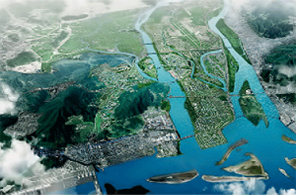 Establishment of an International Industrial Logistics City
 -
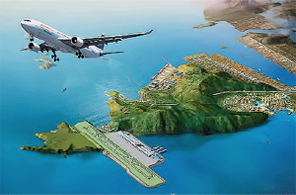 Gadeokdo New Airport
 -
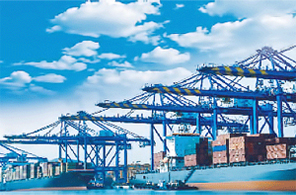 Busan New Port
Key Projects
Accelerated Construction of Gadeokdo New Airport
Project Overview (Ministry of Land, Infrastructure and Transport Basic Plan)
- Airport Size: 6.67 million m² (Focused on International Routes)
- (Airside) 1 Runway, 74 Aircraft Parking Spaces, etc.
- (Land Side) Passenger Terminal 258,000 m², Cargo Terminal 22,000 m²
- (Airport Support Facilities Site) 1.26 million m² - Air Traffic Demand: (Passengers) 23.26 million, (Cargo) 335,000 tons
- Total Project Cost: 15.4 trillion won
- Airport: 13.49 trillion, Roads: 0.63 trillion, Access Rail: 1.27 trillion
Gadeokdo Airport Complex City Development Initiative
Airport Complex City
- To establish an international business hub city by performing the functions of an airport hinterland support city, deploying diverse functions linked to the Quattroport economic zone and surrounding development projects
- Scale/Period: 9.89 million m² (approx. 3 million pyeong) in Gadeokdo-dong, Gangseo-gu / '21~'34
Designation as an Economic Free Zone
- Establish a development plan reflecting the new airport construction plan through an Economic Free Zone designation feasibility study, and pursue designation as an Economic Free Zone (Application for Economic Free Zone designation in the second half of 2025)
Establishment of global logistics hub port infrastructure and enhancement of Busan Port's global competitiveness
Global Port Infrastructure Development
- Establishment of digital and eco-friendly port infrastructure befitting its international standing
- Expansion of infrastructure for the new port (27 berths ⇒ 53 berths by 2040) and hinterland complex (5.83 million m² ⇒ 8.29 million m² by 2030)
- Fostering high-value-added port service industries (One-stop joint logistics center, eco-friendly energy bunkering terminal)
- Establishing a foundation for Busan Port's smart integrated platform (2026-2029 / 40 billion won), including establishing an overall ISP for Busan Port
Activating International Port Logistics
- Establishing a marine economic hub linked to global markets and regional industries
- Responding to the rapid growth of the global e-commerce market, expanding the attraction of sea express cargo to Japan (twice-yearly incentive support)
- Newly opening the Busan-Ningbo ferry route, promoting the activation of sea express services to China (feasibility study to be pursued, '24~'25)
- Creating a marine industry cluster at Uam Pier in Busan Port (reviewing the scale of attracting core industry-related companies and establishing support facilities, etc.)