








- Home
- Investment Opportunities
- Sites
- Location Report
Location Report
- Incheon
- Gangwon
- Daejeon
- Chungbuk
- Gyeongbuk
- Jeonnam
Date
2026.04.09
Overview
Korea's bio industry is transforming beyond mere technology catch-up, evolving into a globally recognized hub for manufacturing and innovation. According to the 'Survey of Domestic Bioindustry 2024' released at the end of 2025, the domestic bio production scale reached KRW 22.92 trillion (USD 17.2 billion), showing strong growth with a 9.8 percent increase year-on-year. This growth is attributed to robust exports of biopharmaceuticals alongside large-scale facility investments from both private and public sectors. Korea now offers foreign investors an optimal business environment through a specialized cluster strategy that maximizes its geographic and policy advantages.
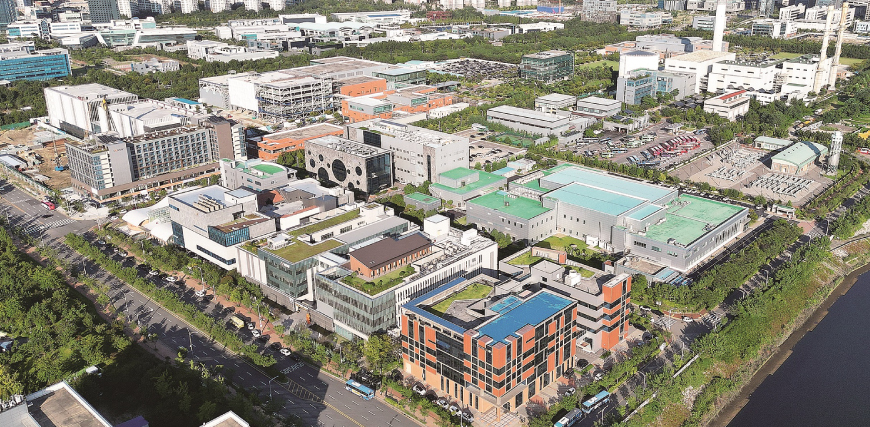
Incheon Songdo: World's Largest Global BioProduction and Logistics Hub
The first location to note is Incheon Songdo, the undisputed heart of global biomanufacturing. By 2026, the Songdo Bio Cluster's biopharmaceutical production capacity will surpass 1.16 million liters, solidifying its position as the world's largest single-city biomanufacturing hub. Leading players in the global contract development and manufacturing organization (CDMO) market, including Samsung Biologics, Celltrion, and Lotte Biologics, are concentrated in this area. A roadmap to secure ultra-competitive production capacity exceeding 2.14 million liters by 2030 is being steadily implemented.
Songdo's greatest strength is its global connectivity. Its proximity to Incheon International Airport provides an ideal environment for the air transport and cold chain logistics that biopharmaceuticals require. In addition, the immediate availability of skilled professionals, supported by specialized training institutions such as Yonsei University’s Bioprocessing Technology Training Center, provides a strong advantage for foreign companies considering large-scale manufacturing investments.
Songdo's greatest strength is its global connectivity. Its proximity to Incheon International Airport provides an ideal environment for the air transport and cold chain logistics that biopharmaceuticals require. In addition, the immediate availability of skilled professionals, supported by specialized training institutions such as Yonsei University’s Bioprocessing Technology Training Center, provides a strong advantage for foreign companies considering large-scale manufacturing investments.
Osong, Chungcheongbuk-do: Where Regulation Meets Innovation
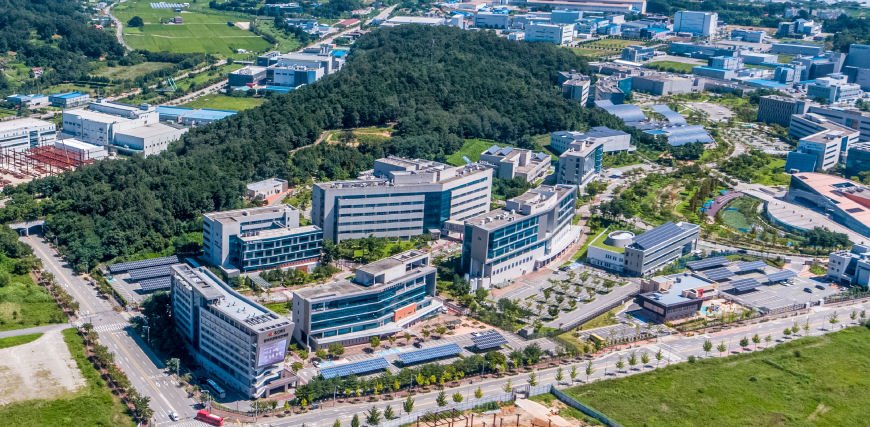
While production infrastructure is concentrated in Songdo, Osong in North Chungcheong Province serves as a key hub for regulatory affairs and R&D— both critical to bringing new drugs to market. Osong is an administrative center where six major national agencies, including the Ministry of Food and Drug Safety and the Korea Disease Control and Prevention Agency, are concentrated, providing a strong geographic advantage for close communication and efficient regulatory response in new drug approval and licensing processes.
Osong was designated Korea’s first global innovation zone for advanced regenerative bio, granting regulatory exemptions. The designation of the Osong 3rd Life Science National Industrial Complex will significantly expand available land, further enhancing its investment appeal. Osong is expected to grow into an innovation hub comparable to Boston's Kendall Square through the creation of the 'K-Bio Square,' where research institutes, universities, and hospitals are clustered together. For companies where time-to-approval is a decisive factor, Osong represents a strategic advantage.
Osong was designated Korea’s first global innovation zone for advanced regenerative bio, granting regulatory exemptions. The designation of the Osong 3rd Life Science National Industrial Complex will significantly expand available land, further enhancing its investment appeal. Osong is expected to grow into an innovation hub comparable to Boston's Kendall Square through the creation of the 'K-Bio Square,' where research institutes, universities, and hospitals are clustered together. For companies where time-to-approval is a decisive factor, Osong represents a strategic advantage.
Five Clusters, One Vision: Korea's National Bio Strategy
The Korean government has designated bio as a national strategic industry alongside semiconductors, aiming to become one of the 'Top Five Global Bio Powers'. It is strengthening a comprehensive support system connecting key hubs nationwide. Designated in June 2024 to secure cutting-edge technological competitiveness, the five Specialized Complex for National High-Tech Strategic Industries offer diverse options tailored to corporate characteristics.
①Incheon & Gyeonggi Region: Aims to create the world's largest biopharmaceutical manufacturing cluster by linking Songdo's manufacturing capabilities with Siheung's R&D infrastructure.
②Daejeon Region: Specialized in creating innovative new drug pipelines and supporting global clinical trials, leveraging the abundant R&D capabilities of the Daedeok Innopolis.
③Gangwon (Chuncheon & Hongcheon) Region: Targets new drug development using AI technology and establishing a hub for small-to-medium CDMOs, while linking digital healthcare infrastructure.
④Jeonnam (Hwasun) Region: Possesses a full-cycle ecosystem for advanced vaccines and immunotherapies, based on Korea's only Vaccine Industry Special Zone.
⑤Gyeongbuk (Andong & Pohang) Region: Combines Andong's cell culture infrastructure and Pohang's accelerator research institute with other R&D foundations to foster the advanced biopharmaceutical industry.
Companies located within Korea's bio clusters gain opportunities for collaborative research through networks of industry, academia, research institutes, and hospitals. They also benefit from access to public CDMO facilities for both pilot-scale and commercial-scale manufacturing.Furthermore, the government plans to establish a KRW 1 trillion (USD 750 million) Bio Mega Fund by 2027, strengthening financial support and incentive systems to accelerate the growth of Korea’s bio industry.
①Incheon & Gyeonggi Region: Aims to create the world's largest biopharmaceutical manufacturing cluster by linking Songdo's manufacturing capabilities with Siheung's R&D infrastructure.
②Daejeon Region: Specialized in creating innovative new drug pipelines and supporting global clinical trials, leveraging the abundant R&D capabilities of the Daedeok Innopolis.
③Gangwon (Chuncheon & Hongcheon) Region: Targets new drug development using AI technology and establishing a hub for small-to-medium CDMOs, while linking digital healthcare infrastructure.
④Jeonnam (Hwasun) Region: Possesses a full-cycle ecosystem for advanced vaccines and immunotherapies, based on Korea's only Vaccine Industry Special Zone.
⑤Gyeongbuk (Andong & Pohang) Region: Combines Andong's cell culture infrastructure and Pohang's accelerator research institute with other R&D foundations to foster the advanced biopharmaceutical industry.
Companies located within Korea's bio clusters gain opportunities for collaborative research through networks of industry, academia, research institutes, and hospitals. They also benefit from access to public CDMO facilities for both pilot-scale and commercial-scale manufacturing.Furthermore, the government plans to establish a KRW 1 trillion (USD 750 million) Bio Mega Fund by 2027, strengthening financial support and incentive systems to accelerate the growth of Korea’s bio industry.
* Source: Ministry of Trade, Industry and Resources; Ministry of Land, Infrastructure and Transport; Ministry of SMEs and Startups; Ministry of Health and Welfare; Incheon Free Economic Zone Authority; Chungcheongbuk-do Provincial Government; Korea Industrial Complex Corporation